Главная / Новости и идеи / Pretensioning vs Post Tensioning
Pretensioning vs Post Tensioning: Which Method Do Hollow Core Slabs Use?
Pretensioning vs post tensioning comes down to one question: is the steel stressed before the concrete is cast, or after it hardens? Both methods let concrete span further with less material, but they work in different places, with different equipment. Here is how they differ and what a hollow core slab line actually needs.
Short answer: in the pretensioning vs post tensioning question, hollow core slabs produced on long casting beds are pretensioned. The steel is stressed before the concrete is placed, and the force is released once the concrete has gained enough strength. Post-tensioning is mainly used for cast-in-place and large structural work.
Searching for pretensioning vs post tensioning returns plenty of textbook definitions. Few of them explain what it means for a plant that is about to buy equipment. This article covers the difference, why hollow core slab production relies on pretensioning, and what to check on the tensioning side of the line before you buy.
1. What is pretensioning?
In pretensioning, wires or strands are stretched along the casting bed and anchored at both ends before any concrete is placed. The concrete is then cast around the stressed steel and cured. When the concrete reaches its specified strength, the steel is released. It tries to shorten, and because it is bonded to the concrete, it pushes the slab into compression.
- Lay out and anchor the steelPull the wires or strands along the clean bed between the end abutments.
- Tension to the design forceJack each wire or strand to the required force and check elongation against the expected value.
- Cast and compact the concreteThe forming machine runs along the bed over the stressed steel. The steel must stay at force while this happens.
- Cure and testLet the concrete gain strength, then confirm release strength by testing.
- Release and cutTransfer the force to the concrete following the approved procedure, then cut the slabs to length.
2. What is post-tensioning?
In post-tensioning, the concrete is cast first, with ducts left inside it. After the concrete has hardened, tendons are threaded through the ducts, stressed with jacks and locked off against the concrete with anchorages. The force is carried by those end anchors rather than by bond along the length of the steel.
This makes post-tensioning flexible. Tendons can follow curved profiles, and the work can be done on site. It is common in bridges, parking structures, and long-span or heavily loaded slabs.
3. Pretensioning vs Post Tensioning at a Glance
| Фактор | Pretensioning | Post-tensioning |
|---|---|---|
| When steel is stressed | Before the concrete is cast | After the concrete has hardened |
| Where it is done | Factory or plant, on a fixed bed | Factory or, more often, on site |
| How force reaches the concrete | Bond between steel and concrete, on release | End anchorages, with tendons in ducts |
| Typical products | Hollow core slabs, beams, lintels, piles | Bridge girders, cast-in-place slabs, large structures |
| Best suited to | Repetitive, high-volume production | One-off or site-specific work |
| Key equipment | Tensioning machine, abutments, grips and chucks | Stressing jacks, ducts, anchorage hardware, grouting |
4. Why hollow core slabs are pretensioned
A hollow core slab is thin for its span. Concrete is strong in compression and weak in tension, so the bottom face of a slab spanning between supports would crack under a modest load. Pre-compressing the concrete fixes that: the built-in compression has to be used up before the bottom face goes into tension.
Pretensioning fits the way hollow core slab production works. The line is a long, fixed bed, the product repeats, and a forming machine travels along the bed placing concrete over the stressed steel. That is the opposite of a one-off site pour, which is why post-tensioning is not the usual choice for this product. If you want to see the forming side of the same line, read our guide to a hollow core slab machine manufacturer, or look at the бетонные пустотелые плиты формовочная машина и экструдер для сборных бетонных плит.
5. Pretensioning equipment on the line
The tensioning side of a hollow core line is more than a single jack. Pretensioning equipment usually includes:
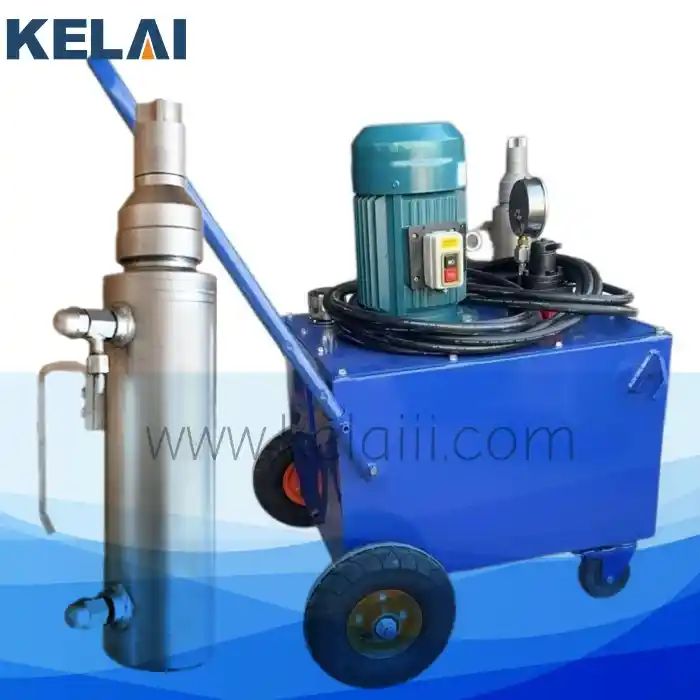
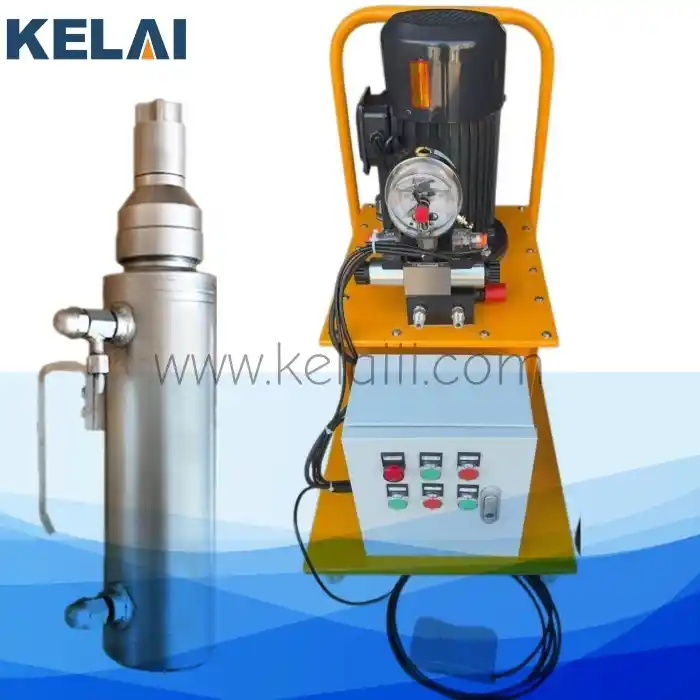
- A hydraulic tensioning machine and pump station to pull each wire or strand to force. See our гидравлическая машина для натяжения стальной проволоки.
- Anchorage hardware, such as grips and chucks, that holds the steel at each end
- End abutments on the casting bed that carry the total force
- Measurement of force and elongation, so each bed can be checked against the design
- A consistent mix from a бетоносмесительная установка
- Strength testing before release, for example with an automatic compression testing machine
The same tensioning principle is used for other prestressed products. KELAI also builds a машина для изготовления перемычек из преднапряженного бетона и precast T beam making machine. For a broader view of all machine types, see our precast concrete machinery guide.
6. KELAI KL-800 Prestressed Steel Wire Tensioning Machine
The KL-800 hydraulic tensioning machine is designed for prestressed products including hollow core slabs, wall panels, beams and lintels. Full details are on the машина для натяжения предварительно напряженной стальной проволоки page. The China site shows the same model as the KL-800 prestressing steel wire tension machine.

| Параметр | Value |
|---|---|
| Pump station type | Manual or solenoid-operated |
| Hydraulic pump rated pressure | 15 MPa |
| High-pressure flow | 1 L/min |
| Motor power | 1.5 kW |
| Гидравлический цилиндр | 15 MPa, 63 mm diameter |
| Cylinder stroke options | 800 mm, 900 mm or 1200 mm |
| Гидравлическое масло | #20 hydraulic oil, replaced once a year |
Steel sizes and tension force depend on the model and configuration, so please связаться с нами with your wire or strand specification and we will confirm what suits your line.
7. Five Checks Before You Buy Pretensioning Equipment
| Check | Why it matters |
|---|---|
| Steel type and diameter | Jacks, grips and anchors are built for a specific steel size range. Confirm yours falls inside it. |
| Force per wire or strand | The machine must reach your design force with margin, not at its limit. |
| Force and elongation records | You need readings you can keep, so a batch can be proven correct when a customer or inspector asks. |
| Bed length and abutments | The equipment must suit your bed, and the abutments must carry the total force. |
| Service and spare parts | Seals, hoses and grips wear. Ask how fast replacements arrive. See what we cover on our страница «Услуги». |
8. Safety basics
A tensioned wire or strand stores a large amount of energy. Treat the bed as a hazardous area while steel is under force.
- Keep people out of the line of the steel and the ends of the bed during tensioning and release.
- Use guards and anchors rated for the force, and inspect grips and chucks regularly.
- Release force only after release strength is confirmed, and follow the approved sequence.
- Inspect high-pressure hoses regularly and replace them on schedule, as the machine manual specifies.
- Train operators on the specific equipment and keep maintenance records.
Always follow the engineering design and the safety standards that apply in your country.
9. Frequently asked questions
What is the difference between pretensioning and post tensioning?
In pretensioning, the steel is stressed before the concrete is cast and the force is transferred to the concrete by bond when the steel is released. In post-tensioning, the concrete is cast first, and the tendons are stressed inside ducts after the concrete has hardened, then anchored against the concrete.
Are hollow core slabs pretensioned or post-tensioned?
Hollow core slabs made on long casting beds are pretensioned. The wires or strands are stressed between end abutments, the slab is formed over them, and the force is released once the concrete reaches its specified strength.
When is the pretensioning force released?
Only after the concrete has reached the specified release strength, confirmed by testing, and following the approved release procedure.
What equipment is needed for pretensioning?
A pretensioning setup normally includes a hydraulic tensioning machine with a pump station, anchorage hardware such as grips and chucks, end abutments on the casting bed, and a way to measure force and elongation.
What should I tell a supplier when asking about tensioning equipment?
Share the steel type and diameter, the required force per wire or strand, bed length, slab range and output target, so the supplier can match the equipment to your line.
Planning a Hollow Core Slab Line?
Tell us your steel specification, bed length and output target. Our engineers will suggest a tensioning setup that fits your line.
Связаться с KELAI View tensioning machineЭлектронная почта [email protected] · WhatsApp +86 17788171295 · KELAI China