Table of Contents
ToggleHollow Core Slab Machine Manufacturer: The Buyer’s Guide for India, the Middle East and Africa
By the Henan Kelai Technical Team · 18 min read · Updated June 2026
Demand for prestressed hollow core slabs is growing faster than ever across India, the Gulf states, East Africa and North Africa. New housing programmes, infrastructure investment and the shift away from cast-in-place concrete are driving precast plant owners — and first-time investors — to search for reliable hollow core slab machine manufacturers that can deliver production-ready equipment at competitive cost.
This guide covers everything you need to evaluate before placing an order: machine types, extruder specifications for each thickness (120 mm, 150 mm, 200 mm and 300 mm), production line scope, casting bed layout, prestressing requirements, and commercial terms on FOB and CIF basis. Where relevant, we highlight how Henan Kelai Industrial Co., Ltd. — a dedicated hollow core slab machine manufacturer with more than 15 years of export experience — addresses each point.
1. Why Hollow Core Slabs Are Taking Over Floor Construction in India, the Middle East and Africa
Before evaluating equipment, it helps to understand why the market you are entering is growing so rapidly.
India India’s housing shortage, combined with the government’s push for affordable housing under PMAY and smart city programmes, has created enormous demand for fast, cost-efficient floor construction. Hollow core slabs reduce construction time by 40–60% compared to conventional in-situ concrete floors, and require significantly less labour on site — both critical advantages in the Indian construction market. States such as Gujarat, Maharashtra, Telangana and Uttar Pradesh have seen rapid growth in precast hollow core slab adoption.
Middle East (UAE, Saudi Arabia, Kuwait, Qatar) The Gulf construction sector has long used hollow core slabs in commercial and residential towers, car park decks and infrastructure projects. Vision 2030 (Saudi Arabia) and ongoing infrastructure expansion across the UAE and Kuwait continue to generate strong demand for local precast production capacity. Many plant owners in the region are now investing in their own hollow core slab extruder lines rather than importing finished slabs.
Africa (Ethiopia, Kenya, Nigeria, Egypt, Tanzania) Africa is the fastest-growing market for hollow core slab production lines. Rapid urbanisation, a severe housing deficit — estimated at more than 50 million units across sub-Saharan Africa — and growing contractor awareness of precast concrete’s speed and quality advantages are driving demand. Egypt’s new administrative capital project, Ethiopia’s condominium housing programme and Nigeria’s mass housing initiatives are all consuming hollow core slabs at scale.
2. What Is a Hollow Core Slab Extruder and How Does It Work?
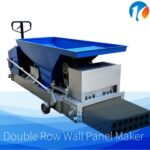
A hollow core slab extruder — also called a pushing-type machine or auger extruder — is a self-propelled forming machine that travels along a prestressed casting bed, feeding stiff zero-slump concrete through a forming head that shapes the slab cross-section and creates the longitudinal voids (cores) simultaneously.
The key components of the forming process are:
- Auger assembly: Rotating screws feed and compress concrete through the forming head at controlled pressure
- Mandrels: Steel cores that form the hollow voids as concrete is pushed around them
- Side forms: Define the slab width (typically 1,200 mm) and side profile
- Compaction zone: The dry-cast concrete is compacted under auger pressure, achieving very low water/cement ratios (typically 0.30–0.35) and high compressive strength (C45–C60)
As the machine moves forward along the casting bed, it leaves behind a continuous strip of freshly formed hollow core slab. After steam or natural curing and strand release, a travelling diamond-blade saw cuts the strip into individual slab units at specified lengths.
This process is fundamentally different from cast-in-place concrete and from traditional precast methods. It requires no formwork, minimal labour during casting, and produces a consistent, high-strength structural element ready for crane installation within 24 hours of casting.
3. Hollow Core Slab Extruder: Specifications for 120 mm, 150 mm, 200 mm and 300 mm
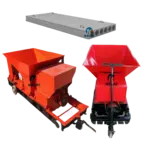
Kelai manufactures dedicated pushing-type extruders for each standard slab thickness. Each machine is purpose-built for its specific cross-section — the auger geometry, mandrel configuration and compaction parameters are all optimised for that one thickness. Kelai does not offer a single machine that covers multiple thicknesses via tooling changes; instead, each thickness has its own dedicated extruder, which delivers superior consistency and efficiency.
Hollow Core Slab Extruder 120 mm
| Parameter | Specification |
|---|---|
| Slab thickness | 120 mm |
| Standard slab width | 1,200 mm |
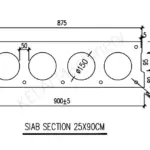
| Core configuration | 5 circular cores |
| Concrete type | Zero-slump dry-cast |
| Recommended strand | 12.7 mm, 4–5 strands per slab |
| Typical span range | 3–6 m |
| Primary applications | Lightweight residential floors, balconies, short-span roofs |
| Machine self-weight | ~3,500 kg |
| Production speed | ~3–4 m/min |
The 120 mm hollow core slab extruder is the most compact machine in the range and is well suited to housing projects where floor loads are moderate and spans are under 6 m. It is widely used in affordable housing programmes across India and East Africa.
Hollow Core Slab Extruder 150 mm
| Parameter | Specification |
|---|---|
| Slab thickness | 150 mm |
| Standard slab width | 1,200 mm |
| Core configuration | 5–6 circular cores |
| Concrete type | Zero-slump dry-cast |
| Recommended strand | 12.7 mm, 4–6 strands per slab |
| Typical span range | 4–7 m |
| Primary applications | Residential floors, light commercial floors, schools, clinics |
| Machine self-weight | ~4,000 kg |
| Production speed | ~2.5–3.5 m/min |
The 150 mm extruder is consistently one of the highest-demand machines across all three target markets. Its span range covers the majority of residential and light commercial applications, and it is the most common starting point for new precast plants in India and the Gulf.
Hollow Core Slab Extruder 200 mm
| Parameter | Specification |
|---|---|
| Slab thickness | 200 mm |
| Standard slab width | 1,200 mm |
| Core configuration | 6–7 circular cores |
| Concrete type | Zero-slump dry-cast |
| Recommended strand | 12.7 mm or 15.2 mm, 4–6 strands per slab |
| Typical span range | 5–9 m |
| Primary applications | Commercial floors, office buildings, warehouses, car parks |
| Machine self-weight | ~4,800 kg |
| Production speed | ~2–3 m/min |
The 200 mm hollow core slab extruder is the workhorse of commercial precast production. It is the most versatile thickness in the range, capable of covering both upper-end residential and standard commercial applications. Plants in Saudi Arabia, the UAE and Egypt typically run 200 mm as their primary product alongside 150 mm.
Hollow Core Slab Extruder 300 mm
| Parameter | Specification |
|---|---|
| Slab thickness | 300 mm |
| Standard slab width | 1,200 mm |
| Core configuration | 6–8 circular or oval cores |
| Concrete type | Zero-slump dry-cast |
| Recommended strand | 15.2 mm, 5–7 strands per slab |
| Typical span range | 8–14 m |
| Primary applications | Long-span commercial floors, industrial buildings, logistics centres, car park decks |
| Machine self-weight | ~6,200 kg |
| Production speed | ~1.5–2.5 m/min |
The 300 mm extruder addresses the long-span structural market. As commercial real estate and logistics warehouse construction accelerates across the Gulf and major African cities, demand for 300 mm slabs is growing rapidly. This machine is typically paired with 15.2 mm low-relaxation strand and designed for spans up to 14 m under standard design loads.
4. Compaction Quality and Structural Performance
One of the most important — and most frequently asked — technical questions is how dry-cast extruded hollow core slabs compare in quality to slipformed or wet-cast alternatives.
Concrete compaction The auger-pressure compaction process used in Kelai’s extruders achieves concrete compaction equivalent to vibration compaction in wet-cast systems, but at a water/cement ratio of 0.30–0.35 — significantly lower than most wet-cast mixes. The result is a denser, less permeable concrete matrix with compressive strengths typically in the C45–C60 range.
Structural performance Hollow core slabs produced on Kelai extruders are designed and manufactured to meet the requirements of:
- EN 1168 (European standard for precast hollow core slabs)
- IS 1343 (Indian standard for prestressed concrete)
- IS 6452 (Indian standard for prestressing strand)
- ASTM C1214 (US standard for hollow core slabs)
- Gulf standards (GSO, SASO) as applicable
Surface finish The top surface of extruded slabs has a naturally rough texture suitable for structural topping or screed. The soffit (underside) is smooth and consistent, making it suitable for exposed ceiling applications common in commercial construction across the Middle East.
5. Casting Bed Length: Why Longer Is Better
A question that repeatedly arises from buyers in India and Africa is whether production machines are limited to short casting beds of 60–80 m. The answer for Kelai equipment is unambiguous: Kelai extruders operate on casting beds of any length, including 100 m, 150 m, 180 m and beyond.
Longer casting beds deliver compounding economic benefits:
Reduced strand waste At each end of a casting bed, a length of prestressing strand is consumed in the stressing and anchoring process without becoming part of a finished slab. On a 60 m bed, this waste represents a proportionally much larger share of total strand used than on a 150 m bed. For a plant consuming several tonnes of strand per week, this difference adds up significantly over a year.
Fewer daily set-ups Each casting cycle requires strand threading, tensioning, concrete casting, curing, strand release and saw cutting. On a longer bed, each of these operations covers more finished product — reducing the number of set-ups per tonne of output and lowering labour cost per square metre.
Higher crane utilisation An overhead crane lifting finished slab bundles from a 150 m bed handles larger loads per lift and fewer total lifts per day than on a short bed, improving efficiency and reducing wear on lifting equipment.
Recommended bed lengths by market context
| Plant type | Recommended bed length | Rationale |
|---|---|---|
| New small plant (India, Africa) | 80–100 m | Lower civil cost, fast setup |
| Mid-size commercial plant | 120–150 m | Best balance of output and strand efficiency |
| High-volume plant (Gulf, Egypt) | 150–180 m | Maximum output, lowest cost per m² |
6. Complete Production Line Scope
A hollow core slab production line is more than the extruder alone. Kelai supplies the complete line, with each component quoted separately so customers can adjust scope based on existing equipment. The full scope (excluding concrete batching plant) includes:
Core equipment
- Dedicated hollow core slab extruder(s) for each required thickness
- Concrete distribution shuttle / self-propelled feeding wagon (matched to bed length)
- Travelling diamond-blade saw with variable angle cutting (0–90°)
Prestressing system
- Hydraulic stressing jack (compatible with 12.7 mm and 15.2 mm strand)
- Hydraulic pump unit with calibrated pressure gauge
- Load cell for precise prestress force measurement
- Wedge anchor grip sets and strand chucks
Handling and curing
- Adjustable lifting beam with vacuum suction cup cluster
- Steam curing pipe system and distribution manifold (or thermal curing hoods)
- Casting bed rails and precision-levelled rail supports
- Reinforced concrete abutment design drawings
Engineering and support
- CAD plant layout drawing tailored to customer’s building dimensions
- On-site installation supervision
- Commissioning and trial production
- Operator training programme (typically 10–14 days on-site)
- 12-month structural warranty
- Spare parts package
7. Why Choose Henan Kelai as Your Hollow Core Slab Machine Manufacturer
There are several hollow core slab machine manufacturers in China, and a smaller number of well-known European suppliers. Here is how Kelai positions within that landscape.
Against European suppliers (Elematic, Nordimpianti, Echo Precast) European machines are high quality but carry a price premium that is difficult to justify for plants serving the Indian, African or entry-level Gulf market. FOB prices for a comparable European five-machine line typically run from €1.5 million to €3 million or more. Spare parts take 4–12 weeks to arrive from Europe, and service visits are expensive. Kelai delivers equivalent structural output at a fraction of the price, with spare parts available in 1–3 weeks and regional technical support.
Against low-cost Chinese competitors Not all Chinese hollow core slab machine manufacturers invest equally in engineering quality, after-sales service and export documentation. Kelai differentiates on three points: precision-machined auger and mandrel components with hard-chrome coating for wear resistance; a structured commissioning and training programme included with every line; and a documented reference list of operating plants across India, the Middle East and Africa that buyers can contact or visit.
Kelai at a glance
| Founded | 2008 |
| Headquarters | Zhengzhou, Henan Province, China |
| Export markets | 30+ countries |
| Reference plants in India | Yes — Gujarat, Maharashtra, available on request |
| Reference plants in Middle East | Yes — UAE, Saudi Arabia, Kuwait |
| Reference plants in Africa | Yes — Ethiopia, Kenya, Egypt, Nigeria |
| Warranty | 12 months on structural components |
| After-sales | Remote support + on-site service programme |
| Standards compliance | EN 1168, IS 1343, ASTM C1214 |
8. Commercial Terms: FOB and CIF Pricing for India, Middle East and Africa
Kelai provides formal budgetary quotations on both FOB Chinese port and CIF destination port basis. Standard destination ports covered include:
- India: Mundra, Nhava Sheva (JNPT), Chennai, Visakhapatnam
- Middle East: Jebel Ali (UAE), Dammam (Saudi Arabia), Shuwaikh (Kuwait), Hamad (Qatar)
- Africa: Mombasa (Kenya), Dar es Salaam (Tanzania), Lagos (Nigeria), Alexandria (Egypt), Djibouti
Standard commercial terms
| Item | Details |
|---|---|
| Payment terms | 30% T/T advance + 70% T/T before shipment, or irrevocable L/C at sight |
| Lead time | 12–18 weeks from receipt of advance payment |
| Quotation validity | 30 days |
| Packing | Export standard, seaworthy wooden crating |
| Documentation | Commercial invoice, packing list, bill of lading, certificate of origin, test report |
| Installation | On-site supervision included; travel and accommodation at buyer’s cost |
What the quotation package includes Every formal quotation from Kelai is accompanied by the company profile and catalogue, machine operation videos for each extruder thickness, technical data sheets, a reference plant list with contact details, and a preliminary plant layout drawing based on the customer’s building dimensions.
9. Frequently Asked Questions
What is the minimum order — can I buy just one extruder to start?
Yes. Many customers begin with a single extruder for their highest-demand thickness — most commonly 150 mm or 200 mm — and add machines for additional thicknesses as their market develops. There is no minimum order quantity.
How much space do I need for a hollow core slab production plant?
A single-bed plant with one extruder requires a minimum building of approximately 12 m wide × 100 m long. A two-bed plant with two to three extruders running simultaneously typically needs 20 m × 150 m or larger. Kelai provides a specific layout recommendation based on the customer’s building dimensions at no cost as part of the quotation process.
What skills do my operators need?
No prior hollow core slab production experience is required. Kelai’s on-site commissioning team trains operators from scratch over 10–14 days, covering machine operation, concrete mix control, stressing procedures, saw cutting and slab handling. Most plants in Africa and India have successfully started production with locally recruited operators following Kelai’s training programme.
Can the slabs be designed for local building codes in India, the Gulf or Africa?
Yes. The slab design — load tables, span tables, strand layout and topping requirements — is prepared by the customer’s structural engineer using standard prestressed concrete design methods (IS 1343, EC2, ACI 318, as applicable). Kelai provides reference design data and cross-section drawings to assist the engineer. The extruder produces the slab to the specified cross-section; structural design responsibility remains with the engineer of record.
What is the typical return on investment for a hollow core slab plant?
This varies significantly by market, product mix, plant utilisation and selling price. As a general reference, a single 150 m casting bed running one 200 mm extruder can produce approximately 150–180 m² of finished slab per day on a single-shift basis. At typical selling prices in India (₹550–800/m²), the Middle East (USD 18–28/m²) and East Africa (USD 20–30/m²), a two-bed plant operating at 70–80% utilisation typically achieves payback on equipment investment within 18–36 months. Kelai can provide a simple financial model on request.
Do you have an agent or representative in my country?
Kelai works directly with end customers in most markets, which removes agent markup and ensures direct technical communication. In some markets — including India and the UAE — local representatives are available to facilitate site visits and commercial discussions. Contact Kelai’s export team to confirm representation in your specific country.
10. How to Request a Quotation from Henan Kelai Industrial
To receive a detailed budgetary quotation, please provide the following information:
- Required slab thicknesses (120 mm, 150 mm, 200 mm, 300 mm or a combination)
- Number of casting beds planned
- Building dimensions (length × width)
- Destination port and country
- Whether a batching plant is already available
- Preferred phasing if ordering in stages
Kelai’s export team responds to enquiries within 24–48 hours with a preliminary quotation and layout recommendation. For customers in India, the Middle East and Africa, site visits to reference plants can be arranged upon request.
Henan Kelai Industrial Co., Ltd. Zhengzhou, Henan Province, China Keywords: hollow core slab machine manufacturer · hollow core slab extruder 120mm · hollow core slab extruder 150mm · hollow core slab extruder 200mm · hollow core slab extruder 300mm · precast concrete hollow core slab production line
Pushing Type Precast Concrete Slab Machine for Sale | Hollow Core & Solid Slab Equipment – Kelai