
Concrete Mixer Batching Plant
What type of machinery are you looking for? LET US HELP YOU FIND THE RIGHT PRECAST CONCRETE PRODUCT MAKING EQUIPMENTS!
Precast concrete extruder supporting equipment supplier
Henan Kelai Industrial Co., Ltd. is a leading manufacturer of precast concrete equipment in Henan, China. As a professional manufacturer and exporter, we specialize in designing and producing various concrete product-making machines, including slab floor, wall panel, fence panel, column (T, H, I, L, U, V… shapes), pipe, block machinery and Concrete Mixer Batching Plant along with supporting and installation equipment.In addition to our standard product line, we offer customized solutions to meet specific customer needs.
With over 10 years of export experience, our dedicated team ensures our equipment, known for durable quality, high productivity, and cutting-edge technology, reaches clients worldwide. We are committed to building long-term, honest, and mutually beneficial partnerships with construction companies globally.
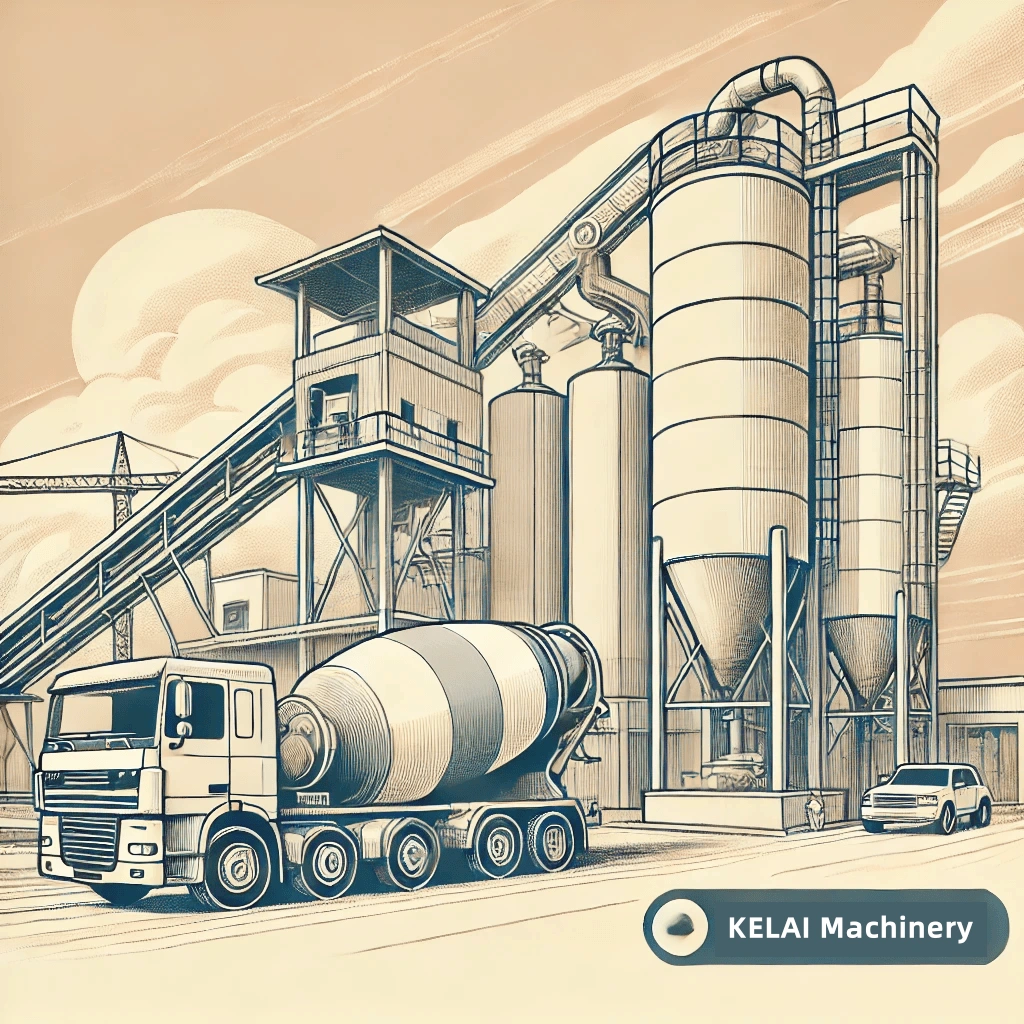
Working Principle of Concrete Mixer Batching Plant
The working principle of a concrete mixing plant is to meter, transport and mix raw materials such as cement, sand, stone, water and admixtures according to the preset ratio, and finally produce concrete that meets the engineering requirements. The whole process is usually managed by an automated control system to ensure production efficiency and concrete quality.
Raw material storage and supply
Aggregates (sand, stone): delivered to aggregate silos by loaders and transported to batching systems via belt conveyors or hopper elevators. Powders (cement, fly ash, etc.): stored in cement silos and transported to metering systems via screw conveyors. Water and admixtures: stored in water tanks and admixture tanks respectively, and transported to metering devices via pipelines.
Raw material metering
Aggregate metering: Aggregates such as sand and stone are weighed by electronic metering systems. Powder metering: Powders such as cement and fly ash are weighed by screw weighing systems. Water and admixture metering: flow meters or weighing systems are used to accurately control the amount of addition.
Conveying and feeding
After the metering is completed, the aggregate enters the mixer directly through the belt conveyor or hopper. Cement and other powders are fed into the mixer through a screw conveyor. The measured water and admixtures are transported to the mixer through a pipeline.
Concrete mixing
Start the mixer and mix all the raw materials evenly to ensure that the concrete meets the set quality standards. The general mixing time is 30-90 seconds, which may vary for different models of mixers.
Technical Parameters of JS Series Concrete Mixer Batching Plant
| Model | Production Capacity (m³/h) |
Concrete Mixer | Discharge Capacity (L) |
Feeding Capacity (L) |
Mixing Cycle (s) |
Maximum Aggregate Size (mm) |
Mixing Blade Speed (r/min) |
Discharge Height (m) |
Main Motor Power (kW) |
|---|---|---|---|---|---|---|---|---|---|
| JS500 | 25 | JS500 Twin-Shaft Mixer | 500 | 800 | 72 | 40–50 | 35 | 3.8 | 18.5 |
| JS750 | 35–37.5 | JS750 Twin-Shaft Mixer | 750 | 1200 | 72 | 40–60 | 31 | 3.8 | 30 |
| JS1000 | 50 | JS1000 Twin-Shaft Mixer | 1000 | 1600 | 60–72 | 60–80 | 25.5–29.6 | 3.8 | 37 |
| JS1500 | 75 | JS1500 Twin-Shaft Mixer | 1500 | 2400 | 60–72 | 60–80 | 23–25.5 | 3.8 | 45 |
| JS2000 | 100 | JS2000 Twin-Shaft Mixer | 2000 | 3200 | 60 | 80–100 | 23–24.5 | 3.8 | 2 × 37 |
| JS3000 | 150 | JS3000 Twin-Shaft Mixer | 3000 | 4800 | 60 | 80–120 | 21 | 3.8 | 2 × 55 |
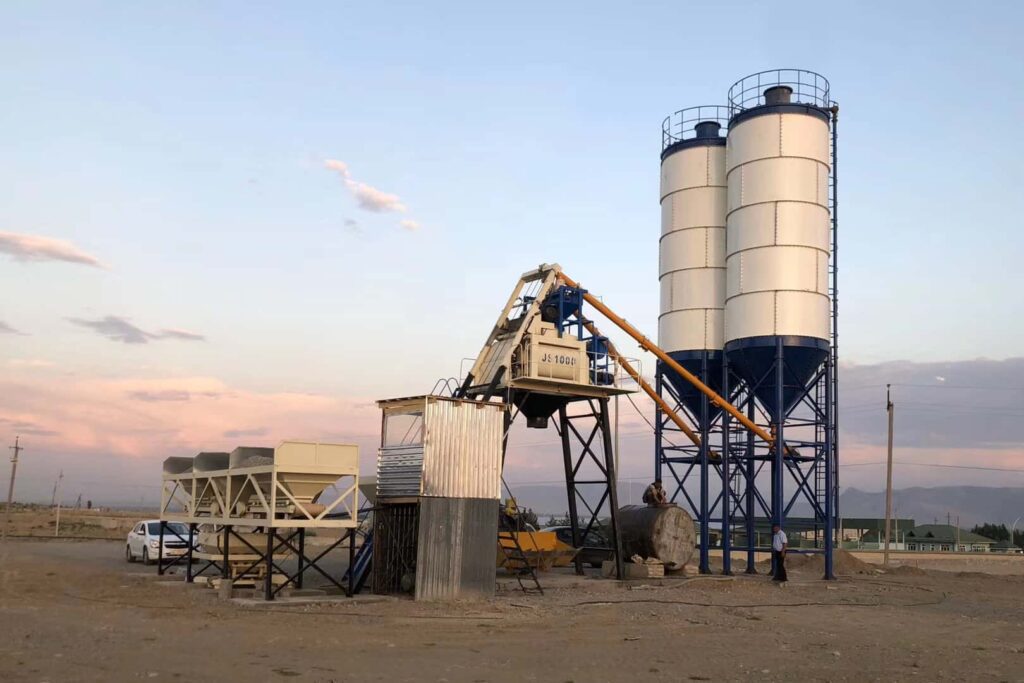
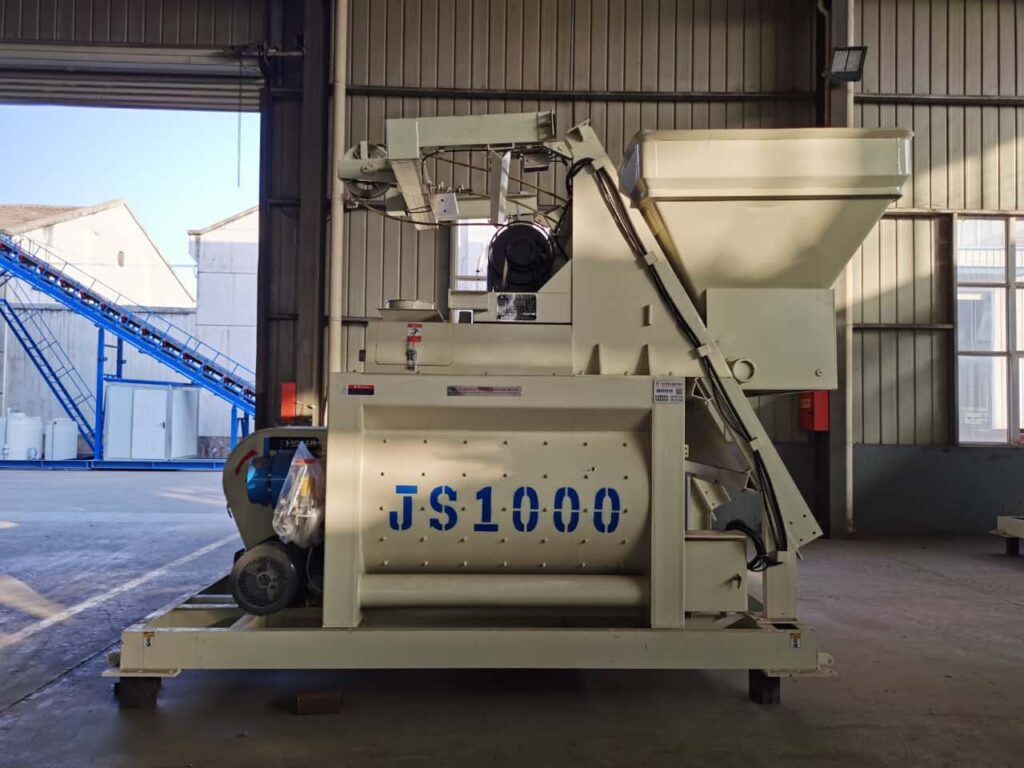
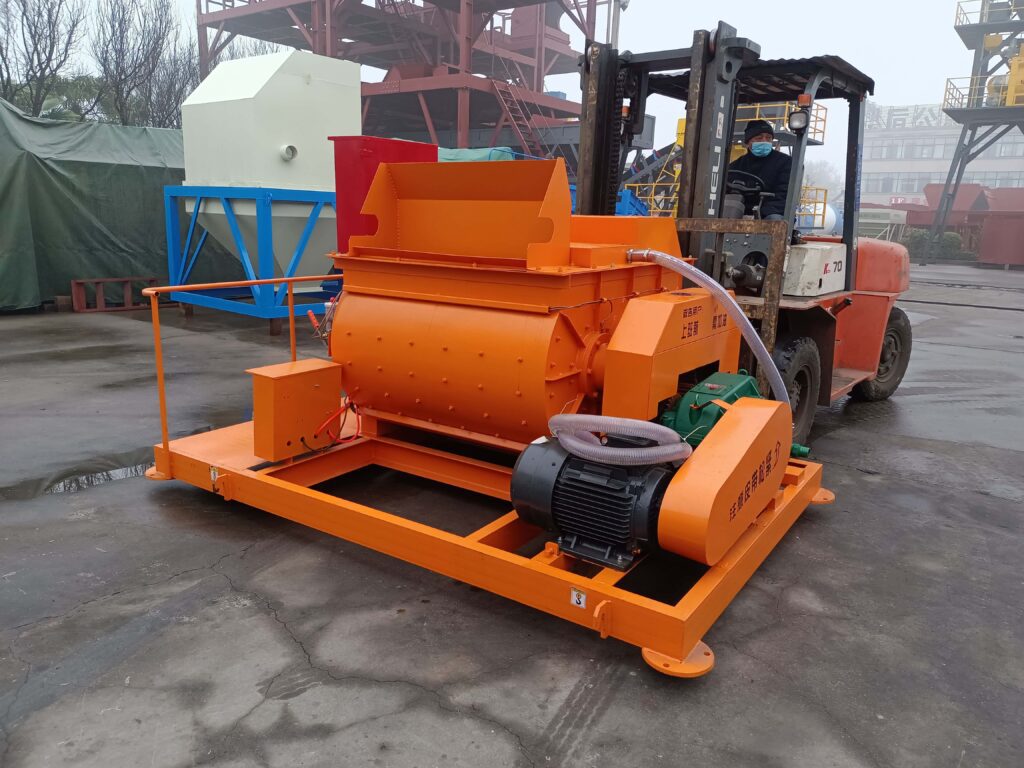
The mixer is the core component of the concrete mixing plant. It is responsible for mixing various raw materials evenly. Common types of mixers include twin-shaft mixers, single-shaft mixers and forced mixers. The choice of mixer depends on production needs, concrete type and construction scale.
Aggregate storage system It is used to store aggregates such as sand and stone, usually in separate warehouses, and each warehouse has an independent feeding system that can automatically transport aggregates to the mixer.
Cement storage and delivery system Cement is delivered from the cement storage system to the mixer through a dedicated screw conveyor or pneumatic conveying system.
What Is a Concrete Batching Plant?
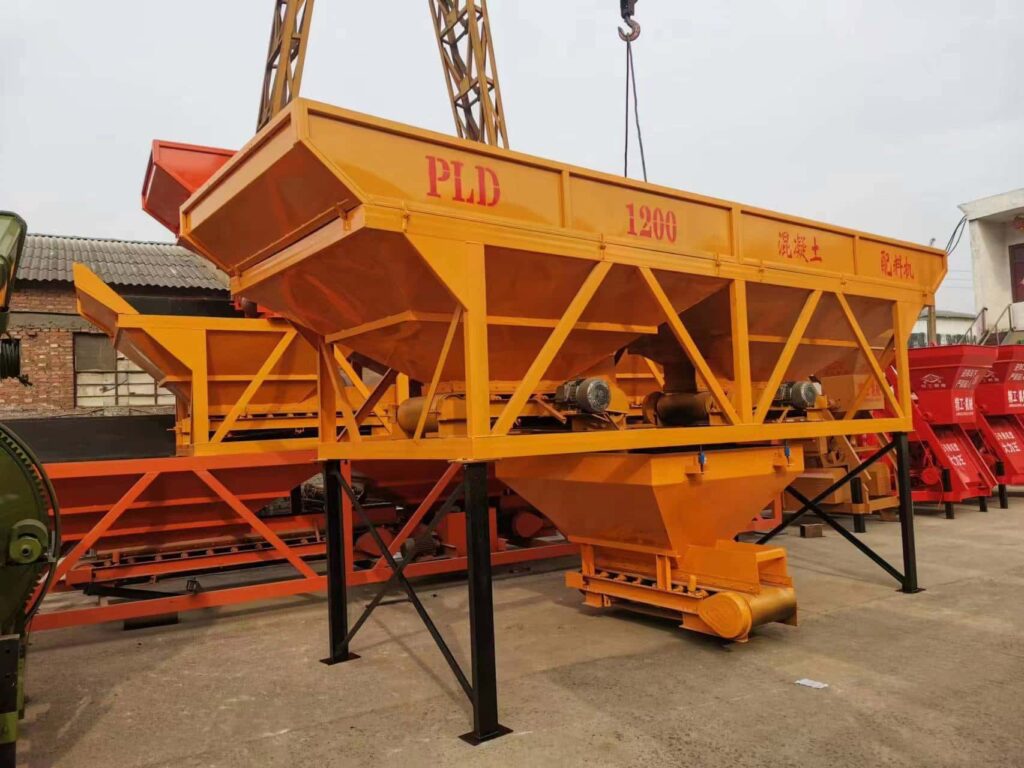
A concrete batching plant, also called a concrete mixing plant, is a complete system used to produce fresh concrete by accurately measuring, batching, and mixing different raw materials according to a preset mix ratio. The main raw materials include cement, sand, gravel, crushed stone, water, and chemical admixtures. The batching system accurately weighs each material before feeding it into the concrete mixer. After thorough mixing, the finished concrete is discharged into a transit mixer truck, concrete pump, or other delivery equipment. Compared with manual concrete mixing, an automatic concrete batching plant provides higher batching accuracy, better mixing consistency, lower material waste, and significantly higher production efficiency. Modern concrete batching plants are commonly used in construction projects, highway and railway construction, bridge projects, precast concrete factories, commercial concrete plants, and other infrastructure projects.
Main components
(1) Aggregate supply system
Aggregate silo: used to store aggregates such as sand and stone. Generally, there are multiple silos to meet the needs of different proportions.
Conveying system: Aggregates are transported to batching machines using belt conveyors or hopper elevators.
Batching machines: Accurately measure various aggregates to ensure stable concrete quality.
(2) Powder supply system
Cement silo: stores cement or fly ash. Usually, it adopts a closed structure to prevent dust pollution.
Screw conveyor: used to transport powder from the silo to the mixer to ensure production continuity.
(3) Water and admixture supply system
Water tank: stores water required for mixing. Some large sites use underground water tanks.
Admixture system: includes storage tanks, metering pumps, conveying pipelines, etc., used to accurately add admixtures to improve concrete performance.
(4) Measuring system
Aggregate metering: sand and stone aggregates are accurately measured through an electronic weighing system.Powder metering: cement, fly ash and other powders are accurately measured using a spiral scale.Water and admixture metering: flow meters or weighing metering devices are used to ensure the accuracy of concrete mix ratio.
(5) Mixing system
Main mixer: core equipment, generally a twin-shaft forced mixer is used to ensure uniform mixing of concrete.
Discharging system: after mixing, the concrete is discharged through a pneumatic discharge door or hydraulic system and transported to a concrete tanker.
(6) Control system
Automation control: including PLC system and computer console, which can accurately control each link and improve production efficiency.
Data storage and management: the production data of each batch of concrete can be recorded to facilitate quality traceability.
Remote monitoring: some advanced systems support remote control, which is convenient for management personnel to check the production status at any time.
Why Choose JS Series Concrete Mixer Batching Plant?
The JS Series Concrete Mixer Batching Plant is designed for customers who require reliable concrete production, accurate material measurement, and efficient mixing performance.
High-Efficiency Twin-Shaft Mixer
The JS series twin-shaft concrete mixer uses two horizontal shafts with mixing blades to create intensive mixing action. This allows cement, aggregates, water, and admixtures to be distributed evenly throughout the mixture in a relatively short mixing cycle.
Accurate Automatic Batching
The aggregate batching system uses weighing hoppers and high-precision weighing sensors to control the quantity of each material. Accurate batching helps maintain the required concrete mix design and improves the consistency of the finished concrete.
Stable Concrete Quality
Accurate batching combined with efficient twin-shaft mixing helps produce concrete with consistent composition and uniform quality. This is particularly important for projects with strict concrete strength and workability requirements.
Automatic PLC Control
The plant can be equipped with an automatic PLC control system for centralized operation. Operators can select or set concrete mix recipes and monitor batching, weighing, conveying, mixing, and discharge processes from the control system.
Flexible Configuration
The concrete batching plant can be configured according to the customer’s required production capacity, aggregate storage requirements, cement storage capacity, feeding method, and site conditions.
Suitable for Various Projects
The JS Series Concrete Mixer Batching Plant can be used for commercial ready-mix concrete production as well as concrete supply for roads, bridges, buildings, precast factories, and large infrastructure projects.
How Does a Concrete Batching Plant Work?
The working process of a JS Series Concrete Mixer Batching Plant can be divided into several main steps:
Step 1: Aggregate Feeding
Sand, gravel, and other aggregates are stored in the aggregate bins. According to the selected concrete mix recipe, the batching system automatically weighs the required quantity of each aggregate.
Step 2: Aggregate Conveying
After weighing, the aggregates are transferred to the mixer through a belt conveyor, hopper, or other feeding system depending on the plant configuration.
Step 3: Cement and Powder Batching
Cement and other powder materials are accurately weighed and conveyed from the cement silo to the mixing system through screw conveyors.
Step 4: Water and Admixture Dosing
The required amount of water and chemical admixtures is measured automatically according to the preset concrete mix ratio.
Step 5: Mixing
All accurately measured materials enter the JS twin-shaft concrete mixer. The two mixing shafts rotate simultaneously to thoroughly combine the cement, aggregates, water, and admixtures.
Step 6: Concrete Discharge
After the mixing cycle is completed, the discharge gate opens and the finished concrete is delivered to a transit mixer truck, concrete pump, or other equipment for transportation and use.
This automated process helps maintain consistent batching accuracy and concrete quality while reducing manual operation.
The Other Machines Other Machines You May Like!
GET A QUICK QUOTE
Focus on: Precast concrete floor slabs maker, Precast concrete beams maker, Precast concrete walls maker, Precast concrete block pipe maker&Matching supporting machines.