How Are Precast Panels Made? A Complete Guide to Precast Wall Production Machine Technology
Introduction: The Modern Way to Build Walls — Fast, Consistent & Automated
Precast concrete wall panels are factory-produced structural elements manufactured under controlled conditions and then transported to construction sites for rapid assembly. Unlike traditional brick-by-brick masonry, precast panels are formed in a specialized industrial facility using a Precast Wall Production Machine, which guarantees uniform quality and significantly reduces on-site labor requirements.
The key to mass production efficiency lies in the Automatic Precast Extrusion Wall Panel Production Line — a fully integrated, controlled system that takes raw materials from the batching stage all the way through to finished, cured panels ready for delivery. This technology has become the backbone of modern prefabricated construction, used in residential apartment towers, commercial buildings, industrial warehouses, and boundary wall systems worldwide.
In this guide, we walk through every step of how precast panels are made, the machinery involved, and why manufacturers around the world trust leading suppliers like Henan Kelai Industrial Co., Ltd. to engineer their production lines.
How Precast Wall Panels Are Made: The Complete Production Process
A modern Automatic Precast Extrusion Wall Panel Production Line covers every stage from batching to storage — all in one continuous, automated workflow. Here is exactly how it works.
Step 1 — Raw Material Preparation & Concrete Batching
The production process begins with precision concrete batching. The standard mix consists of cement, clean sand, fly ash, crushed stone aggregates, water, and optional admixtures such as plasticizers or reinforcing fibers. The proportions are carefully calibrated to achieve a “zero-slump” semi-dry mix — a stiff, low-water-content consistency specifically required for extrusion technology. The automated batching system ensures every batch meets exact specifications, eliminating human error and guaranteeing consistent panel quality across the entire production run.
Step 2 — Concrete Feeding into the Extrusion Machine
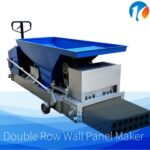
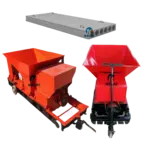
The freshly mixed concrete is loaded into the Precast Wall Production Machine via a moving electric hopper system. The hopper continuously feeds the semi-dry concrete mix onto high-speed rotating screw augers inside the machine’s forming cavity. The augers transport the material forward while simultaneously beginning the compaction process, building up the mechanical pressure needed for extrusion forming.
Step 3 — Continuous Extrusion Forming
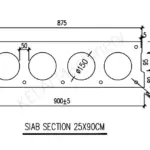
This is the heart of the production line. The high-speed augers force the concrete through precision-shaped forming plates, creating the desired cross-sectional profile of the wall panel — flat, hollow-core, T-shaped, or L-shaped. For hollow-core panels, circular mandrels trail behind the augers, creating perfectly formed internal voids as the machine advances along the casting bed. The extruder machine propels itself forward using the back-pressure generated by the concrete itself — no external drive mechanism is needed on the casting bed surface.
Step 4 — High-Frequency Vibration Compaction
Immediately after extrusion forming, a high-frequency vibration system compacts the concrete in the molding cavity. Vibrator plates powered by a dedicated vibration motor repeatedly tamp the freshly extruded concrete, eliminating any residual air pockets and ensuring a uniformly dense, compact internal structure. This step is critical: it prevents post-installation cracking and gives the finished panel its smooth, uniform surface finish on both faces.
Step 5 — Panel Curing
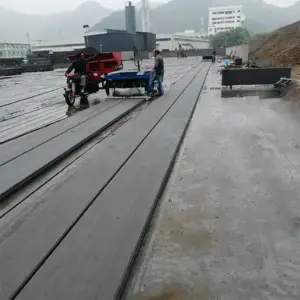
Once panels are extruded and compacted, they are left on the casting bed to undergo curing — the chemical process by which concrete achieves its design strength. In facilities equipped with accelerated curing systems, panels are placed in ground at 5–50°C, dramatically shortening the cure cycle and allowing faster turnover of the production line. For standard outdoor production, natural ambient curing is applied. Because extruded panels are self-supporting immediately after forming, no mold framework is required during the curing period.
Step 6 — Cutting, Separation & Stacking
After curing, the long continuous panel strip is cut to the exact lengths required by the construction project using a panel cutting machine. Clean, precise cuts are made with minimal material waste. Panels are then separated, inspected for quality, and moved to the stacking and storage area. Any excess or off-cut concrete can be recycled directly back into the batching system — the Precast Wall Production Machine generates zero concrete waste. Finished panels are packaged and prepared for logistics and on-site delivery.
What Is an Automatic Precast Extrusion Wall Panel Production Line?
An Automatic Precast Extrusion Wall Panel Production Line is a fully integrated industrial system that combines multiple subsystems into a single continuous workflow: concrete batching, material conveying, extrusion forming, vibration compaction, curing, cutting, and stacking. The entire line is PLC-controlled and operated through a human-machine interface (HMI), making it possible for just 2–3 trained operators to manage the entire production facility.
The core technology is the extrusion principle — fundamentally different from traditional pulling-mold machines, pushing machines, or vertical mold casting systems. Because the extrusion process uses a semi-dry mix and applies continuous mechanical pressure combined with high-frequency vibration, the resulting panels are denser, smoother, and structurally stronger than panels produced by older wet-pour mold methods.
Key Technical Specifications:
- Panel Thickness: 60 mm to 200 mm (60, 75, 90, 100, 120, 150, 200 mm)
- Standard Panel Width: 600 mm
- Panel Length: Cut to any required dimension
- Number of Extrusion Augers: 3 to 20 (depending on panel width and hole configuration)
- Main Motor Power: 5.5 kW to 11 kW
- Operators Required: 2 to 3
The production line is compatible with ordinary concrete (cement + sand + fly ash + gravel) and lightweight concrete alternatives. No specialty foam concrete or exotic admixtures are required. The machine can also operate on a standard flat concrete floor outdoors, without a specially constructed casting bed facility, minimizing infrastructure investment.
The primary mechanical components are engineered for exceptional durability. Auger screws typically require no replacement for up to 80,000 meters of panel production, and vibration plates are rated for even longer service intervals — keeping long-term maintenance costs extremely low.
Key Advantages of the Precast Wall Production Machine
Mold-Free Production The extrusion process requires no fixed molds. Panels are self-supporting immediately after forming, eliminating costly mold fabrication, maintenance, and demolding labor that traditional casting methods demand.
Superior Panel Density & Surface Quality Combined auger pressure and high-frequency vibration compaction produces panels with a uniformly dense internal structure and smooth surface finish on both faces. No secondary surface treatment is required.
High Daily Production Output Continuous extrusion technology allows modern production lines to output 100+ panels per day, far exceeding the throughput of traditional casting methods at a significantly lower unit cost per panel.
Minimal Labor Requirements Full automation means only 2–3 operators are needed to manage the entire Automatic Precast Extrusion Wall Panel Production Line — drastically reducing payroll costs and eliminating human error from the production process.
Zero Concrete Waste Excess or off-spec concrete can be recycled directly back into the batching system without remixing. This eliminates material waste entirely — a major cost advantage over traditional site-cast or mold-cast methods.
Versatile Panel Types & Applications The same production line can manufacture flat, hollow-core, T-joint, and L-joint panels in thicknesses from 60 mm to 200 mm. Applications include interior partitions, exterior walls, boundary fences, and foundation formwork.
Excellent Fire Resistance & Acoustic Performance Concrete precast panels produced by extrusion technology deliver superior fire resistance ratings and effective noise reduction — key performance specifications for residential, commercial, and industrial construction.
Outdoor & Low-Infrastructure Operation No enclosed factory building or specialized casting bed is required. The Precast Wall Production Machine can operate on any level concrete ground, reducing initial facility investment and enabling flexible plant setup.
Henan Kelai Industrial Co., Ltd. — Professional Precast Wall Production Machine Manufacturer
When selecting an equipment supplier for your Automatic Precast Extrusion Wall Panel Production Line, experience, engineering capability, and after-sales support are critical factors. Henan Kelai Industrial Co., Ltd., based in China, is a professional precast concrete machinery manufacturer with over 10 years of specialized expertise in designing and producing extrusion-type wall panel machines.
Henan Kelai supplies complete turnkey production lines capable of producing flat, T-shaped, and L-shaped precast wall panels at industrial scale. Their machines are engineered for continuous high-output operation with minimal operator intervention and maximum mechanical durability. Beyond standard configurations, Henan Kelai also designs and manufactures custom machines for non-standard panel shapes, special sizes, and unique precast concrete components based on specific project or client requirements.
What Henan Kelai Industrial Offers:
- Complete Turnkey Production Lines — End-to-end supply of the full Automatic Precast Extrusion Wall Panel Production Line, from batching plant to stacking and storage systems.
- Custom Machine Engineering — Custom-designed machines for non-standard panel sizes, shapes, and specialized precast components based on client requirements.
- Factory Layout & Installation Support — Professional factory planning, site layout design, on-site installation guidance, and commissioning support to ensure smooth production startup.
- Operator Training & After-Sales Service — Comprehensive operator training programs and ongoing technical support to maintain peak production efficiency throughout the machine’s service life.
- Global Export Experience — Machines and complete production lines exported to precast manufacturers across Asia, Africa, the Middle East, and beyond, with international logistics support.
For companies looking to enter or expand within the precast construction industry, partnering with Henan Kelai Industrial Co., Ltd. provides the engineering expertise, equipment reliability, and technical support needed to build a profitable and competitive precast manufacturing business.
Frequently Asked Questions About Precast Wall Panel Production
What raw materials are required for the precast wall panel extrusion machine?
The standard raw materials are cement, clean sand, fly ash, crushed stone aggregates, and water. Optional admixtures such as plasticizers or reinforcing fibers can be added. No specialty foam concrete is needed, making material sourcing straightforward in most regions. Lightweight aggregates can substitute standard gravel for lightweight panel production.
What panel thicknesses and sizes can a Precast Wall Production Machine produce?
Standard machines produce panels in thicknesses of 60, 75, 90, 100, 120, 150, and 200 mm. The standard panel width is 600 mm, and the panel length can be cut to any required dimension. Custom widths and thicknesses are available through equipment customization by manufacturers such as Henan Kelai Industrial Co., Ltd.
What is the difference between hollow-core and solid precast wall panels?
Hollow-core panels contain cylindrical voids running lengthwise through the panel body, formed by circular mandrels in the extrusion machine. This reduces panel weight while maintaining structural rigidity and improving thermal and acoustic insulation. Solid panels are fully dense throughout and suit applications requiring maximum compressive strength. Both types can be produced on the same Automatic Precast Extrusion Wall Panel Production Line by changing the tooling configuration.
How many workers are needed to operate a full precast wall panel production line?
Thanks to full automation and centralized control systems, a complete Automatic Precast Extrusion Wall Panel Production Line can be operated by as few as 2–3 trained workers. The entire process runs under automated control, reducing dependence on large skilled labor forces.
What are the main applications for precast concrete wall panels?
Precast wall panels are used for interior and exterior partition walls in frame-structure buildings including residential apartments, offices, hospitals, and shopping centers; boundary and perimeter walls for industrial parks and residential compounds; workshop and factory wall cladding; foundation formwork; and modular housing construction.
How does precast panel construction compare to traditional brick masonry?
Precast concrete wall panels offer significantly faster installation, factory-controlled consistent quality, lower long-term labor costs, better fire resistance and acoustic performance, and reduced on-site waste compared to traditional brick masonry. The shift from masonry to precast panels is a defining trend in modern construction industry productivity.
Conclusion: The Future of Wall Construction Is Precast
Modern construction demands speed, consistency, and cost control that traditional on-site methods cannot deliver at scale. The Automatic Precast Extrusion Wall Panel Production Line addresses all three — automating the entire manufacturing process from raw concrete batching to finished, installation-ready panels, with minimal labor and zero material waste.
Whether you are a construction materials manufacturer entering the precast market, an established plant upgrading aging equipment, or a developer evaluating vertically integrated production capacity, investing in a professional Precast Wall Production Machine is a strategic step toward long-term competitiveness in the modern construction industry.
With over 10 years of focused engineering expertise in extrusion-type precast machinery, Henan Kelai Industrial Co., Ltd. is equipped to help you design, build, and operate a high-performance precast wall panel production facility — from a single extrusion machine to a complete turnkey factory solution. Contact Henan Kelai Industrial today to discuss your production requirements and receive a customized equipment proposal.
Precast Concrete Wall Panel Extruder Machine for Sale | Kelai Manufacturer